
Supporting our subcontractors' energy transition
With the goal of moving its energy transition forward across its scopes 1, 2 and 3, Heppner continues to encourage its subcontractors to use low-carbon transport for deliveries carried out for Heppner through the Energy Transition Pact.
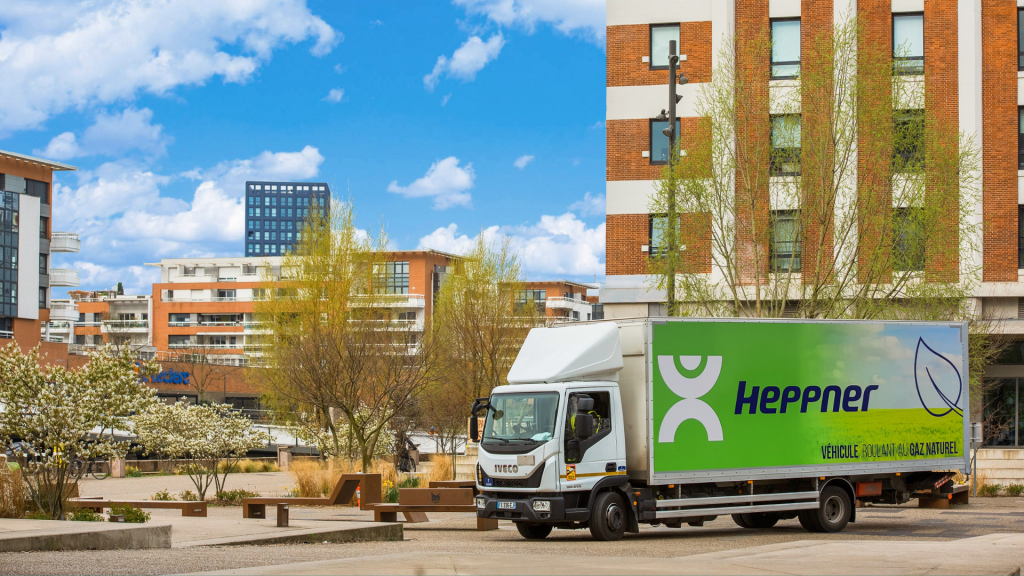
Today, in France, Heppner’s subcontractor fleet, which handles 75% of the deliveries made to end consignees, has a highly diversified energy mix, which will become increasingly electrified in the future.
In 2025, 26.2% of our “last mile” deliveries were made using low-emission vehicles, which is 3.6 points more than in 2024.
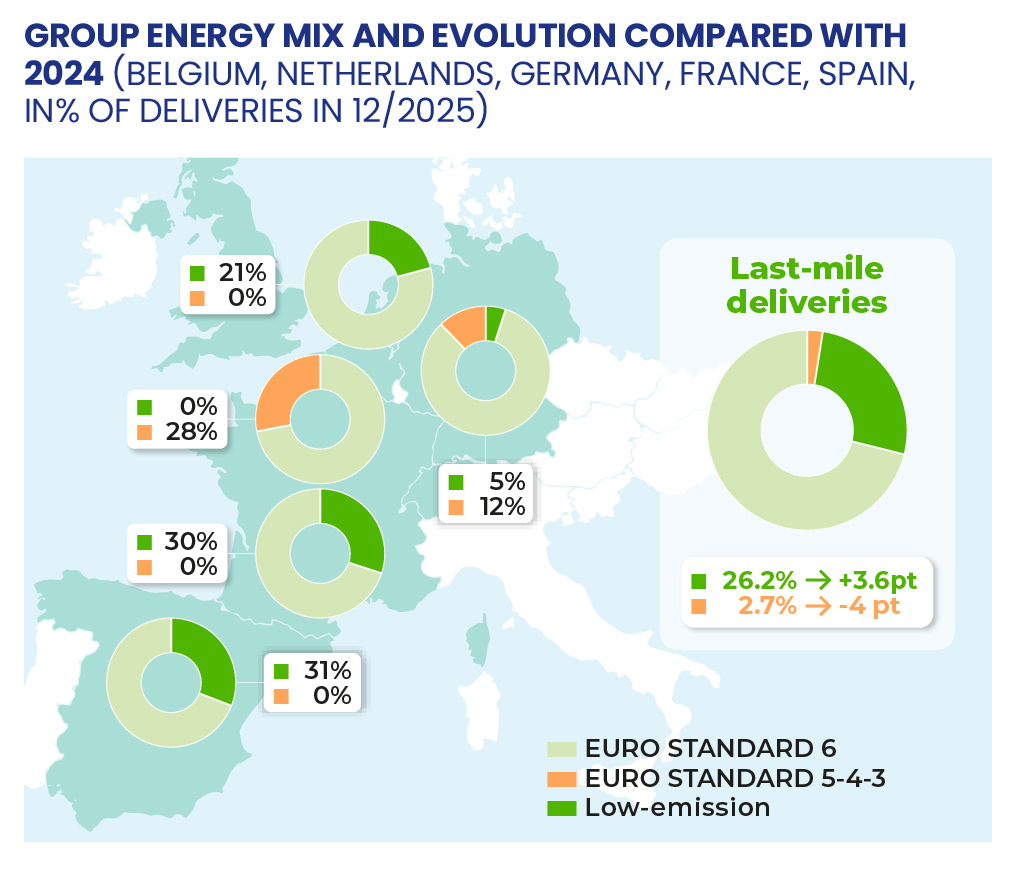
Our subcontractors' energy mix:
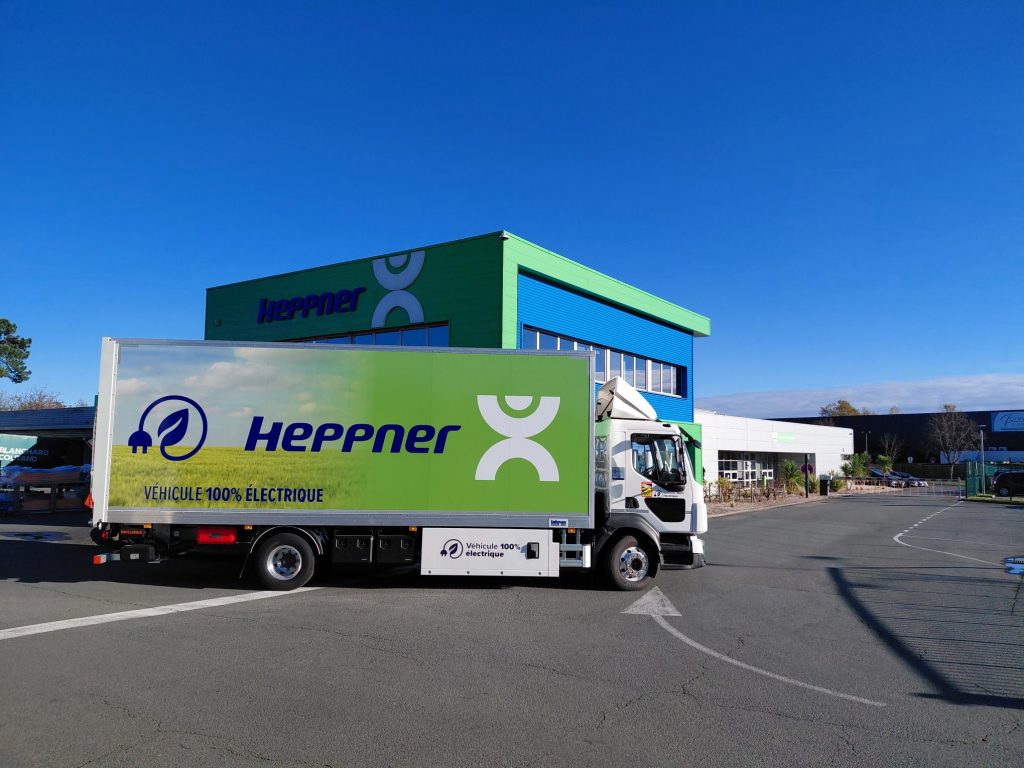
Of the deliveries made by our subcontractors, 18% use low-emission alternative energy sources. These sources make up a comprehensive energy mix, dominated by CNG (7.5%) and bioCNG (1.4%). This proportion is the result of our long-standing Energy Transition Pact, which began with incentives to use CNG/bioCNG-fuelled trucks. The use of biofuels (B100 4.4% and XTL 2%) has grown in recent years, notably thanks to a new initiative under the Energy Transition Pact, which enables subcontractors to install B100 storage tanks on Heppner sites. Despite a difficult economic climate, and particularly with the end of the ColisActiv‘ subsidy programme, cycle logistics remains at 1.5% in around 15 towns and cities in France. Lastly, we are seeing the emergence of electric transport routes using heavy goods vehicles, and no longer just light commercial vehicles, as a clear sign of the industry‘s growing electrification. By gradually equipping our sites with charging points, we are creating the necessary conditions to allow subcontractors to recharge directly on a Heppner site, which will provide an added boost to the electrification of our ecosystem.
Beyond the transition to alternative energy sources for its deliveries, Heppner is working to decarbonise all aspects of its parcel operations.
Haulage operations represent a major area for decarbonisation, with about 32,000 tonnes of CO₂ emitted annually. Today, 17.8% of the kilometres travelled by domestic daily haulage services are covered using low-emission solutions. The goal is to achieve a 20% reduction in CO₂ emissions in 2027 and for 30% of the kilometres travelled to be covered using low-emission solutions.
To this end, an action plan is under way with targets set for the branches, alongside work with our subcontractors to identify the parts of their routes that can be decarbonised in the short term.
We view the energy transition not just as a moral obligation but also as an economic opportunity. Investing early in sustainable technologies gives us an advantage in innovation, resilience and long-term viability. The use of HVO (hydrotreated vegetable oil) represents a concrete and immediately achievable step towards reducing our CO₂ emissions, without having to replace all our existing infrastructure.
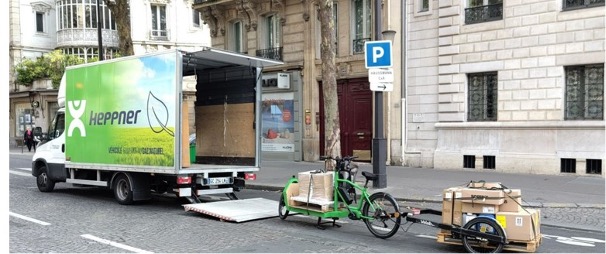
Cycle logistics: a lever for relieving congestion in city centres, improving service quality and reducing CO2 emissions
At the Paris 2024 Olympic Games, transport and logistics operators faced a major challenge: continue making deliveries to ‘red zones’ – off-limits to delivery trucks – without disrupting the service.
Combining the power of its trucks with the agility of cargo bikes, Heppner developed a flexible, decarbonised operating solution that is still being rolled out today. In 2025, this service was available in 18 towns and cities thanks to a network of committed partners.
Heppner was awarded the “Jury’s Special Mention – Green Supply” at the Supply Chain Night held at the Théâtre Mogador at the end of 2025.
Confident of the viability of this innovative, sustainable and agile transport mode, we will continue to develop cycle logistics wherever it makes sense – for our customers, for our territories and for the planet.